
Complete Guide to SSDI and SSI
Navigating Social Security disability benefits can feel like trying to read a foreign language — confusing forms, strict rules, and a lot of “wait, what does that even mean?” moments. If you’re living with a disability and trying to figure out whether you qualify, how much you could receive, or how to actually get approved, you’re in the right place.
This guide is for people applying for the first time, those who’ve already been denied and want to try again, and caregivers helping a loved one through the process.
Here’s what we’ll walk through together:
- SSDI vs SSI differences — these two programs sound similar but work very differently, and knowing which one fits your situation matters
- SSI eligibility requirements and SSDI qualification rules — so you know exactly where you stand before you apply
- How to apply for SSDI and SSI, including practical tips to maximize your approval chances and what to do once benefits kick in
No legal jargon. No runaround. Just a straightforward breakdown of how Social Security disability income works and what you can do right now to move forward with confidence.
Let’s get into it.

Understanding the Difference Between SSDI and SSI
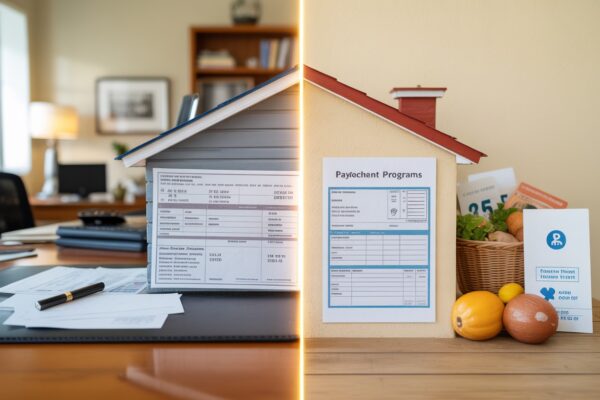
SSDI (Social Security Disability Insurance) is essentially an insurance program you pay into through your work history. Every paycheck you’ve ever received had FICA taxes deducted — those contributions build your eligibility over time. If you develop a qualifying disability and can no longer work, SSDI replaces a portion of your lost income.
To qualify, you need enough work credits, which are earned based on your income each year. Most people need 40 credits total, with 20 earned in the last 10 years before becoming disabled. Your benefit amount ties directly to your lifetime earnings record, so two people with the same disability can receive very different monthly payments.
How SSI Works and Who It Helps
SSI (Supplemental Security Income) takes a completely different approach. It’s a needs-based program funded by general tax revenue, not your work history. That means people who have never worked — including children with disabilities and elderly adults with limited resources — can qualify.
SSI has strict financial limits. Your income and assets are closely examined, and most people must have less than $2,000 in countable assets (or $3,000 for couples) to remain eligible. The monthly payment is standardized through the federal benefit rate, though some states add a small supplement on top.
Key Similarities and Differences Between the Two Programs
Both programs require you to meet Social Security’s definition of disability — a condition that prevents substantial work activity and is expected to last at least 12 months or result in death. Both are managed by the Social Security Administration. For a closer comparison, read SSDI vs. SSI: What’s the Difference and Which Program Is Right for You?
Where they diverge:
- Funding source: SSDI = your work contributions; SSI = federal general funds
- Eligibility basis: SSDI = work credits; SSI = financial need
- Payment amounts: SSDI varies by earnings history; SSI is a fixed federal rate
- Medicare vs. Medicaid: SSDI recipients generally become eligible for Medicare after a 24-month waiting period; SSI recipients may qualify for Medicaid, depending on state rules
Choosing the Right Program for Your Situation
Some people qualify for both programs simultaneously — this is called “concurrent benefits.” It happens when someone has enough work credits for SSDI but their SSDI payment is low enough that SSI can top it up.
If you’ve had limited work history, SSI may be your only path. If you have a strong work record, SSDI generally provides higher payments. Understanding which program fits your circumstances shapes everything about how you apply and what to expect. You can also learn how to qualify for disability benefits without a long work history.

Who Qualifies for SSDI Benefits
Work History and Credit Requirements
SSDI benefits are built around your work history, which is what sets them apart from SSI. To qualify, you need to have earned enough work credits through paying Social Security taxes over the years. The earnings required to earn one credit change annually, and you can earn up to four credits per year.
The number of credits you need depends on your age when you become disabled:
- Under 24: You need just 6 credits earned in the 3 years before your disability started.
- 24–31: You need credits for half the time between age 21 and when your disability began.
- 31 or older: You generally need 20 credits earned in the last 10 years, plus additional credits based on your age.
One key detail people often miss — your credits need to be recent. Older work history alone usually won’t cut it.
Qualifying Medical Conditions for SSDI
The SSA doesn’t have a simple checklist of approved diagnoses. Instead, they maintain a “Blue Book” (officially called the Listing of Impairments), which outlines specific medical criteria across major body systems including musculoskeletal disorders, cardiovascular conditions, mental health disorders, neurological conditions, and cancer. The Complete Guide to Medical Evidence explains how records and medical findings support your claim.
Common conditions that qualify include:
- Chronic heart failure
- Severe depression or bipolar disorder
- Multiple sclerosis
- Degenerative disc disease
- Epilepsy
- Certain cancers
That said, you don’t have to match a Blue Book listing exactly. If your condition is severe enough to prevent you from doing any substantial work, you can still qualify through what’s called a medical-vocational allowance.
How the SSA Evaluates Disability Status
The SSA uses a five-step evaluation process to decide if you qualify for Social Security disability benefits:
- Are you working? If you’re earning above the applicable substantial gainful activity (SGA) threshold, you generally won’t qualify. The threshold changes annually.
- Is your condition severe? It must significantly limit your ability to do basic work tasks.
- Does it match the Blue Book? If your impairment meets or medically equals a listing and the other eligibility requirements are satisfied, SSA can find you disabled at this step.
- Can you do your past work? If your old job is still doable, you won’t qualify.
- Can you do any other work? The SSA considers your age, education, and transferable skills here.
Understanding this process is one of the best ways to maximize your SSDI approval chances before you even submit your application. See our guide to work history and disability grid rules for more about steps four and five.

Who Qualifies for SSI Benefits
Income and Asset Limits You Need to Know
SSI eligibility requirements are built around financial need, so your income and assets matter just as much as your medical condition. In general, countable resources must stay below $2,000 for individuals and $3,000 for couples. Not everything counts toward this limit — your home and one vehicle are generally excluded, while retirement accounts may count depending on their accessibility and other rules.
On the income side, the SSA looks at both earned income (wages) and unearned income (gifts, Social Security payments, etc.). The current Federal Benefit Rate sets the income ceiling, though some income is partially excluded from calculations. Even small amounts of cash help from family members can affect your eligibility, so tracking every source carefully matters.
Age and Disability Requirements for SSI
SSI covers three groups: adults with disabilities, children with disabilities, and adults aged 65 or older — regardless of disability status. If you’re under 65, you’ll need to meet the SSA’s definition of disability, which means having a medically documented condition that prevents substantial work activity and is expected to last at least 12 months or result in death.
Unlike Social Security disability benefits (SSDI), SSI has no work history requirement. That makes it a lifeline for people who’ve never worked or haven’t accumulated enough work credits to qualify for SSDI.
How Household Composition Affects Eligibility
Who you live with directly impacts your SSI payment amount. If someone else pays for your shelter, the SSA may reduce your benefit through what’s called “in-kind support and maintenance” rules. Living with a spouse also matters — the SSA applies deeming rules that count a portion of your spouse’s income toward your eligibility calculation.
Roommate situations are treated differently than spousal ones, but even rent-free living arrangements can trigger a benefit reduction. Always report any changes in your living situation promptly to avoid overpayments.
Special Rules for Children Applying for SSI
Children under 18 can qualify for SSI if they have a severe medical condition and the family meets the financial requirements. The SSA uses parental deeming, meaning a portion of the parents’ income and assets are counted when determining the child’s eligibility.
Once a child turns 18, the SSA conducts an age-18 redetermination using adult disability standards — a critical review point that parents should prepare for well in advance.

How Much Money You Can Receive
Calculating Your SSDI Monthly Payment
Your SSDI payment is based on your lifetime earnings history — specifically, the Social Security taxes you’ve paid over your working years. The Social Security Administration (SSA) calculates your Average Indexed Monthly Earnings (AIME), then applies a formula to arrive at your Primary Insurance Amount (PIA), which becomes your monthly benefit.
The average SSDI payment changes each year, and individual amounts vary widely. Higher lifetime earners receive more, while those with shorter or lower-earning work histories receive less. You can check your estimated benefit anytime through your my Social Security account at ssa.gov.
One important detail: if you receive a pension from work not covered by Social Security (like certain government jobs), your benefit calculation may involve additional considerations. The Windfall Elimination Provision (WEP) was repealed by the Social Security Fairness Act, so it no longer reduces benefits payable for January 2024 and later.
How Additional Income Reduces Your SSI Payment
SSI payment amounts work completely differently. Instead of being tied to work history, SSI has a federal base rate that changes annually, and that amount generally goes down as your countable income goes up.
The SSA uses a formula: they subtract your countable income from the federal benefit rate to determine your SSI payment. Not all income counts equally, though. Generally, the first $20 of most income is ignored, and the first $65 of earned income (plus half of anything above that) is also excluded.
For example, if you earn $500 per month from part-time work and have no other income:
- Subtract the general $20 income exclusion and the $65 earned-income exclusion = $415
- Divide by 2 = $207.50 in countable earned income
- Subtract $207.50 from the current federal SSI benefit rate to estimate the payment, subject to other eligibility and payment rules
Some states add a small supplemental payment on top of the federal rate, so your actual amount may be slightly higher depending on where you live.
When You Can Receive Both SSDI and SSI
Yes, it’s possible to collect both — this is called receiving concurrent benefits. It typically happens when your SSDI payment is low enough that your total income still falls below SSI’s financial limits.
For instance, if your SSDI benefit is only $500 per month, you may qualify for a partial SSI payment to bridge the gap. Your SSI amount would be calculated by treating your SSDI as unearned income and applying the same reduction formula.
Concurrent benefits can also give you access to both Medicare and Medicaid, subject to each program’s eligibility and timing rules.

How to Apply and Maximize Your Chances of Approval
Gathering the Documents You Need Before Applying
Before you submit anything, pull these documents together:
- Medical records from all treating physicians, hospitals, and specialists
- Work history for the period SSA requests (job titles, duties, dates); SSA generally uses a five-year past-relevant-work lookback under rules effective in 2024
- Tax returns and W-2s to verify your earnings record
- Birth certificate and Social Security card
- Medication list with dosages and prescribing doctors
- Lab results, imaging reports, and treatment notes
The stronger your medical paper trail, the better your shot at approval. Gaps in treatment can raise questions for SSA reviewers. For practical examples, see what medical records Social Security really wants to see.
Step-by-Step Guide to Submitting Your Application
- Apply online at ssa.gov, by phone at 1-800-772-1213, or in person at your local SSA office.
- Complete the Adult Disability Report (SSA-3368) with detailed descriptions of how your condition limits daily activities.
- Submit an Authorization to Disclose Information so SSA can request records directly.
- Keep copies of everything you send.
- Track your application status online through your my Social Security account.
If you may qualify for both SSDI and SSI, ask SSA about applying for both programs so neither is overlooked. For help with applications, see Hallman Woods’ Social Security Disability claim services.
Common Mistakes That Lead to Denial
Most initial SSDI denials come down to a few recurring problems. Our article on why Social Security denies disability claims explores these issues in more detail:
- Sparse medical documentation — if it isn’t in the records, SSA may not have enough evidence to assess it
- Inconsistent statements — what you write on forms should match what doctors document
- Missing deadlines — especially the 60-day appeal window after a denial
- Returning to work — earning above the applicable Substantial Gainful Activity (SGA) limit during your claim can affect eligibility
How to Win Your Case at a Disability Hearing
If you’ve been denied, a hearing before an Administrative Law Judge (ALJ) gives you an opportunity to present your case and address issues in the earlier decision. Learn what to do after a disability denial and review the Complete Guide to Disability Appeals. Here’s how to prepare:
- Consider hiring a disability attorney or advocate — many work on a fee arrangement that does not require upfront payment
- Request and review your claim file before the hearing to spot missing records
- Prepare detailed, accurate testimony about how your symptoms vary, including difficult days
- Address vocational expert testimony directly — your attorney can cross-examine claims that you can perform other work
- Submit updated medical evidence in accordance with the hearing’s evidence deadlines

Managing Your Benefits After Approval
Reporting Changes That Affect Your Benefits
Whether you receive SSDI or SSI, you’re required to report certain life changes to the Social Security Administration promptly. For SSI recipients, this includes changes in income, household members, living arrangements, or resources. SSDI recipients must report any return to work, improvement in medical condition, or changes in address. Missing these reports can lead to overpayments you’ll eventually have to pay back — sometimes years later. A quick call or visit to your local SSA office keeps you protected.
Understanding Continuing Disability Reviews
The SSA periodically reviews your case to confirm you still meet the disability requirements. These are called Continuing Disability Reviews (CDRs), and their frequency depends on whether medical improvement is expected. During a CDR, you may need updated medical records showing your disability persists. The best way to handle one is to keep seeing your doctors regularly and maintain consistent medical documentation. A well-documented medical history can make the review process far smoother.
Working While Receiving SSDI or SSI Benefits
You don’t automatically lose your Social Security disability income the moment you start working. SSDI offers work incentives, including a Trial Work Period (TWP) that lets eligible beneficiaries test their ability to work for nine service months while retaining benefits. A 36-month extended period of eligibility may follow, with payments depending on earnings and the applicable substantial gainful activity (SGA) threshold. Those thresholds change annually.
SSI works differently, using an income calculation formula. SSA generally disregards the first $20 of most income and the first $65 of earned income, then reduces your SSI payment by $1 for every $2 of additional countable earnings. Planning your work activity carefully can help you understand how earnings affect your disability benefits while building financial independence.

How SSDI Converts to Retirement Benefits at Full Retirement Age
When you reach full retirement age — 67 for those born in 1960 or later, and somewhat earlier for some older birth years — your SSDI automatically converts to Social Security retirement benefits. The dollar amount typically stays the same, so there’s no financial disruption. What changes is the program administering your payments. You don’t need to apply for this transition; it happens automatically. If you’re already receiving Medicare through SSDI, that coverage continues uninterrupted as well.
Navigating SSDI and SSI can feel overwhelming, but breaking it down makes it a lot more manageable. Knowing the difference between the two programs, understanding who qualifies, and having a clear picture of what you can expect to receive puts you in a much stronger position. The application process has its challenges, but going in prepared and knowing what the SSA is looking for can seriously improve your odds of approval.
Getting approved is just the beginning. Staying on top of your benefits, knowing the rules, and keeping your information up to date will help you avoid unnecessary disruptions down the road. If you are unsure where to start, consider reaching out to a disability advocate or benefits counselor who can walk you through the process specific to your situation. You can also contact Hallman Woods to discuss your disability claim. You deserve the support you are entitled to, so do not hesitate to take that first step.